Paying Someone to Teach You How to Be You: Inside the Wildly Lucrative World of Celebrity Authenticity Coaching
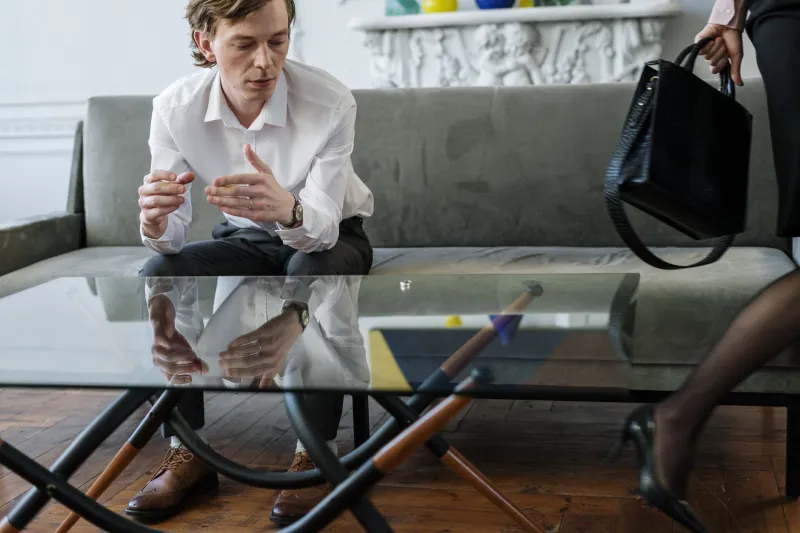
Somewhere in a tastefully minimalist office in West Hollywood, a woman who charges $850 an hour is explaining to a Grammy-nominated artist exactly how to cry on camera in a way that doesn't look coached. She has a whiteboard. There are bullet points. One of them literally says "let the pause breathe."
Welcome to the Authenticity Industrial Complex — a booming, largely unacknowledged corner of the celebrity services economy where high-end strategists, former publicists, and suspiciously well-read psychology graduates are getting paid extraordinary sums of money to help famous people figure out which parts of their actual personality are monetizable and which parts should stay locked in a vault forever.
The irony is so thick you could charge it by the hour. Which, to be clear, they absolutely do.
The Job That Doesn't Have a Business Card (But Absolutely Has an NDA)
These consultants go by a rotating cast of titles: "brand authenticity strategists," "narrative architects," "personal truth coaches." Some just call themselves "talent advisors" and let the vagueness do the heavy lifting. What they all have in common is a very specific skill set — the ability to reverse-engineer a human being's personality into a content strategy without the subject realizing that's what's happening.
"The first thing I do is a full audit," explained one former handler who worked with multiple household-name clients before going independent. She asked not to be named because, in her words, "half my former clients think they came up with everything themselves, and that's literally the product I sold them." The audit, she explained, involves combing through a client's actual history — childhood memories, old friendships, embarrassing phases, genuine fears — and sorting everything into two columns: asset or liability.
The assets get "surfaced." The liabilities get "contextualized" — which is consultant-speak for buried under a more flattering narrative, ideally one that also involves personal growth.
"The goal," she said, "is for the client to eventually tell their own story so naturally that they forget we workshopped it for six weeks."
The Paradox Factory
Here's the central absurdity at the heart of this whole enterprise: the thing that makes a celebrity seem authentic is the appearance of not trying. Audiences in 2024 are exquisitely sensitive to performance — they've grown up watching influencers and reality stars and have developed finely tuned radar for anything that feels manufactured. So the entire job of an authenticity consultant is to manufacture something that defeats that radar.
This requires a level of meta-strategy that is genuinely impressive in a deeply troubling way.
One consultant who works primarily with A-list actors described the process as "controlled spontaneity architecture" — a phrase that should probably be on a warning label somewhere. The idea is to identify genuine emotional moments in a client's life and then build systems around them so those moments surface at strategically useful times. A real memory gets assigned to a press tour. A genuine insecurity gets timed to a vulnerability post. The emotion is real. The timing is a spreadsheet.
"We're not faking anything," this consultant insisted, with what felt like a little too much emphasis on the word faking. "We're just optimizing the delivery."
The Going Rate for Your True Self
So what does all this cost? Sources familiar with the industry put baseline retainer fees for mid-tier celebrity clients somewhere between $15,000 and $40,000 a month. For A-listers navigating major career pivots — a scandal, a rebrand, a very public divorce that needs to become a "personal evolution" — that number climbs fast. Crisis-tier engagements can reportedly hit six figures before anyone's even posted an Instagram caption.
For that price, clients get a full suite of services that might include: scripted "off-script" moments for interviews, a pre-approved list of "surprising" personal details to drop into conversations, detailed coaching on which social media comments to "spontaneously" respond to, and in some cases, actual rehearsal sessions for appearing unrehearsed.
One former music industry executive described watching a major pop star practice looking caught off guard. "Like, literally rehearsing the face," he said. "The slightly open mouth, the little laugh. They did it maybe twelve times before the consultant said it looked natural enough."
Reader, it looked very natural.
Why Audiences Keep Falling For It
The uncomfortable truth that nobody in this industry wants to say out loud is that the whole machine works because audiences want to be convinced. There's a reason "parasocial relationship" became a mainstream term — people genuinely crave connection with celebrities, and they will enthusiastically fill in the gaps with whatever story they've been handed.
Authenticity consultants are essentially professional gap-fillers. They study what an audience wants a celebrity to be, then help the celebrity become just enough of that thing to feel like a revelation.
"The best outcomes are when the client actually starts to believe their own narrative," said one consultant with what might generously be described as unsettling cheerfulness. "When they've internalized it so completely that it's basically real now. That's when you know the work is done."
This is either a profound statement about the malleability of identity or a description of a very expensive brainwashing program. Possibly both.
The Creator Economy's Dirtiest Open Secret
What makes this particularly fascinating — and particularly relevant right now — is how far the authenticity consulting model has trickled down from traditional celebrity into the creator economy. Influencers with audiences in the hundreds of thousands are now hiring mini-versions of these consultants, often rebranded as "content coaches" or "brand storytellers," to perform the exact same function at a slightly lower price point.
The TikToker who seems to just be herself in a refreshingly chaotic way? There's a decent chance someone helped her identify which parts of her chaos were brand-compatible and which parts needed to stay offline. The YouTuber who does those raw, unfiltered vlogs that feel like a window into his actual soul? His editor has notes. His strategist has notes on his editor's notes.
Authenticity has become the most valuable currency in the attention economy, which means it was only a matter of time before someone figured out how to counterfeit it at scale.
The Question Nobody Wants to Answer
Here's the thing that keeps nagging: if the emotions are real, and the stories are real, and the person telling them genuinely believes them — does the strategic packaging actually matter? Is a celebrity who has been coached to share a genuine trauma any less authentic than one who just happened to share it without coaching?
The consultants, predictably, say no. "We're just helping people communicate who they already are," is the line you'll hear over and over. And maybe that's true. Or maybe "who they already are" has been so carefully curated and optimized that the original version is no longer accessible, even to them.
Either way, the industry is booming. The waiting lists are long. And somewhere in West Hollywood, someone is charging $850 an hour to teach a famous person how to seem like they don't need to be taught anything.
The pause is breathing. It looks totally natural.