Opinion Redacted: The Shadow Cabinet That Decides What Your Favorite Celebrity Is Allowed to Think
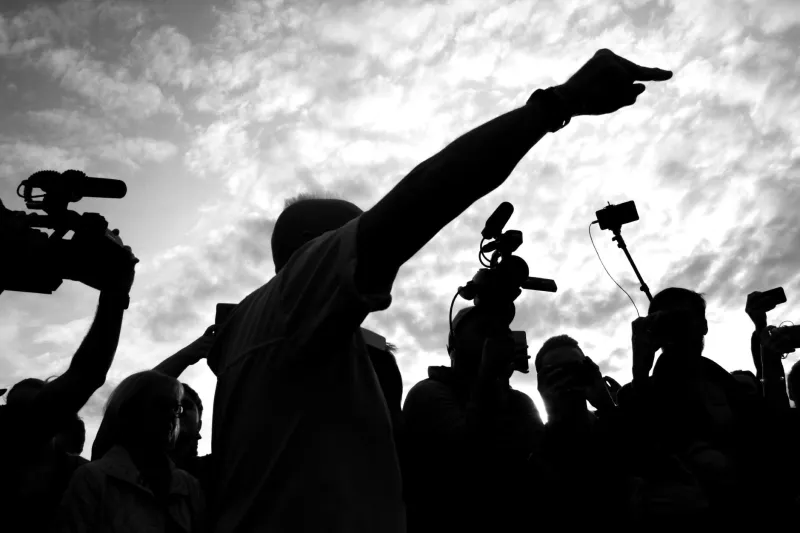
Somewhere between a celebrity's actual brain and your Twitter feed, there is a kill switch. It's operated by a rotating cast of PR reps, brand strategists, social media managers, and extremely nervous talent agents who spend their working hours doing one thing: making sure famous people never say anything real enough to get them in trouble. Or, for that matter, real enough to be interesting.
The result? A celebrity class so thoroughly pre-approved that following them online feels like reading a corporate mission statement written by someone who's really into matcha.
The Meeting That Never Makes the Press Release
Here's how it actually works. A celebrity — let's call her a mid-tier A-lister with a fragrance deal and a Netflix project in post-production — has a thought. Maybe it's about a political candidate. Maybe it's about a cultural moment that's genuinely complicated. Maybe it's just a spicy take on whether a particular film deserved its Oscar. She types it out. She might even feel something while doing it.
Then the draft goes to the team.
The team is not one person. It's never one person. There's the publicist who's thinking about the press junket in six weeks. There's the brand consultant who's thinking about the skincare partnership renewal. There's the social media manager who's thinking about engagement rates and whether this particular opinion will cause a ratio. And somewhere in the background, there's a lawyer who doesn't technically work on "content" but has opinions anyway.
By the time this celebrity's actual thought makes it through that gauntlet, it has been sanded, softened, reframed, and occasionally just quietly buried. What goes up instead is something safe. Something warm. Something that reads like a Hallmark card written by someone who once attended a TED Talk.
Authenticity as a Managed Asset
The cruel irony of modern celebrity culture is that "authenticity" has become the most aggressively manufactured product in the industry. Every PR firm worth its retainer fee now offers some version of a "voice strategy" — a document that essentially tells famous people who they're allowed to be in public. It outlines approved topics, flagged areas, and the carefully calibrated ratio of personal revelation to promotional content that keeps a celebrity feeling human without actually exposing them to human consequences.
This isn't conspiracy. It's just business. Celebrities are brands now, and brands do not have opinions that could alienate seventeen percent of their target demographic. Brands have "values" — a completely different thing that sounds personal but commits to nothing.
The system is self-reinforcing in the most depressing way possible. Celebrities who go off-script get punished — by the press, by Twitter, by sponsors who suddenly need to "reassess the partnership." Celebrities who stay in their approved lane get rewarded with magazine covers and brand deals and the gentle, sustained hum of a career that never peaks but never crashes either. The lesson is obvious. Boring is profitable. Interesting is a liability.
The Ones Who Slipped Through
Occasionally, someone says the actual thing. And the reaction is so disproportionate — so swift and total — that it functions as a very public warning to everyone else watching. One unfiltered comment about a geopolitical situation. One joke that landed wrong with the wrong constituency. One moment of genuine, unmediated humanity. And suddenly the machine that built them is running a very different kind of operation.
This is why the boldest cultural commentary in America right now is not coming from celebrities. It's coming from comedians who've opted out of mainstream validation, from podcasters with enough of an independent audience that sponsors can't fully hold them hostage, from writers who never had brand deals to lose in the first place. The people with the most cultural reach have the least cultural freedom. That's not an accident.
What We Actually Lost
There's a version of celebrity that used to mean something culturally. Not because famous people are inherently smarter or more interesting than anyone else — they're not, and pretending otherwise is its own kind of delusion — but because fame used to carry with it a certain permission to be provocative. To say the thing. To model what it looked like to have a take and defend it.
Think about what it meant when certain artists made explicitly political music in eras when that was genuinely risky. Or when actors used their platforms to say things that cost them work and they said them anyway. There was a version of celebrity that understood its cultural leverage and occasionally used it for something other than selling moisturizer.
That version didn't disappear because celebrities got dumber or more cowardly. It disappeared because the financial infrastructure around celebrity got so complex, so interlocking, and so dependent on broad inoffensiveness that genuine risk-taking became economically irrational. You can't have a streaming deal, a luxury brand partnership, a production company, and a foundation — and also have actual opinions. The math doesn't work.
The Forgettable Ones Win
Ask yourself: who are the celebrities you will remember in twenty years? Not the ones with the cleanest brands. Not the ones whose social media feeds look like a wellness app had a baby with a mood board. You'll remember the ones who said something — even if it was wrong, even if it was messy, even if the team was absolutely furious about it afterward.
The safest celebrities are already disappearing in real time. They're present everywhere and memorable nowhere. Their opinions are so thoroughly curated that following them is essentially following a very attractive FAQ page. They'll keep their deals. They'll keep their covers. They'll keep the machine running smoothly.
And in twenty years, absolutely no one will be able to tell you what they actually thought about anything.
The shadow cabinet will have done its job perfectly. Which is, in the end, the most damning thing you can say about it.