Show Us the Pottery, Babe: A Ruthless Investigation Into Which Celebrity Hobbies Are Real
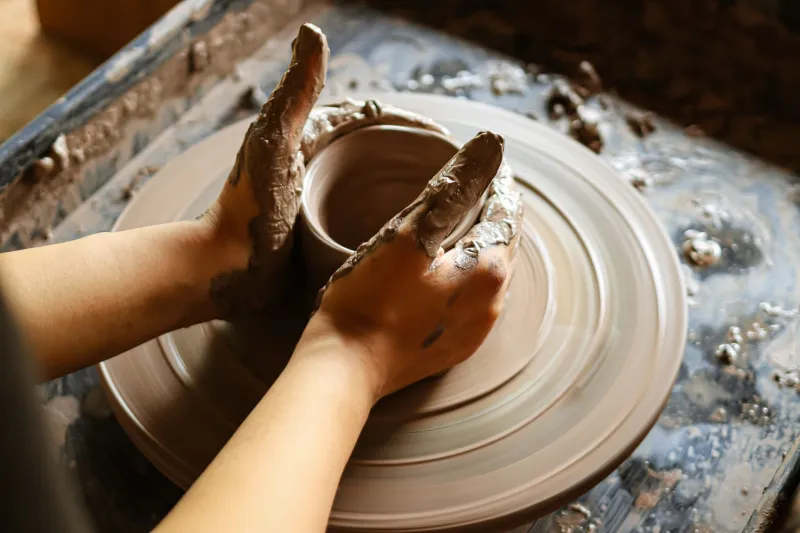
Somewhere in the hills of Los Angeles, a famous person is throwing clay on a wheel they bought eighteen months ago and have touched exactly twice. The photos are gorgeous. The captions are disarmingly humble. The publicist is thrilled. And you, scrolling at midnight, are nodding along thinking, wow, she really is just like us.
She is not like us. But that's not even the interesting part anymore.
The interesting part is the machinery behind the myth — the teams of image architects who identified "tactile hobby" as a gap in their client's relatability portfolio and filled it with a $4,000 wheel and a carefully staged afternoon. Celebrity hobbies have become a full-blown genre of performance art, and frankly, some of them are getting sloppy about it.
So we decided to audit them. Ruthlessly. With receipts.
The Anatomy of a Fake Hobby
Before we name names, let's establish the criteria, because this isn't just vibes-based prosecution. A manufactured hobby has tells. The timeline is suspiciously aligned with a project launch or a PR crisis. The aesthetic is immediately polished — no awkward beginner phase, no lopsided first attempts, no visible learning curve. There's merch within six months. And crucially, the hobby conveniently reflects a value the celebrity needs the public to associate with them: groundedness, creativity, patience, connection to the earth.
Bird-watching says I am contemplative and not like other celebrities. Bread-baking says I am nurturing and domestic but make it feminist. Beekeeping says I care about the environment and also I am a little eccentric in a charming way. These are not hobbies. These are mood boards with Instagram handles.
The tell-tale sign? When a celebrity can't answer a single specific follow-up question. Ask a genuine hobbyist about their craft and they will absolutely ruin your afternoon with detail. Ask someone whose team selected the hobby for them and you'll get three adjectives and a pivot to their upcoming film.
The Ones Who Actually Mean It
To be fair — and we are nothing if not grudgingly fair — some celebrities are genuinely, embarrassingly into their thing, and it shows in the most unstrategic ways possible.
Steve Martin's banjo obsession is the gold standard. The man has been playing bluegrass since before most of his current fans were born, performs at actual festivals where he is not the main draw, and has released albums that were critically respected and commercially irrelevant. Nobody told him to do this. It does not make him more marketable. It is simply a thing he loves, and the evidence trail is decades long.
Nicholas Cage collecting shrunken heads and medieval weapons? Unhinged, yes. Fake? Absolutely not. The financial devastation alone proves it. Nobody burns through a Hollywood fortune on castles and dinosaur skulls as a branding exercise. That's a real person with a real (extremely chaotic) inner life, and we respect it unconditionally.
Then there's Keanu Reeves and his motorcycle company, Arch Motorcycle, which he co-founded in 2011 with a custom bike builder and has been genuinely involved with ever since. No major lifestyle push, no branded content deals saturating his feed, just a guy who loves bikes enough to spend actual money building a company around them. Boring story for a publicist. Perfect story for a person.
The Ones Who Are Absolutely Lying
We're going to be diplomatic here and discuss archetypes rather than individuals, mostly because lawyers exist and also because the pattern is more interesting than any single person.
The Sudden Painter archetype emerges reliably during scandal recovery. The celebrity in question has never mentioned visual art in any interview ever. Then, amid a controversy, a gallery show appears. The paintings are competent in a way that suggests professional guidance. The artist statement is full of words like healing and reclamation. Within a year, prints are available for purchase. The controversy has been successfully reframed as a creative awakening. This is not a hobby. This is a narrative pivot with brushes.
The Wellness Farmer is another classic. A celebrity purchases land, posts about "getting back to basics," and begins documenting what appears to be a working farm. Look closer and you'll notice the farm is staffed by actual farmers. The celebrity appears in content harvesting vegetables they did not plant, feeding animals they did not raise, and standing in fields they did not work. The farm is real. The farming is not.
And then there is the Reluctant Knitter — someone who mentioned, once, in a 2019 interview, that they "sometimes knit to decompress." Their management team heard artisanal, slow living, cottagecore and activated. Now there's a yarn collaboration, a podcast episode, and a New York Times Style section piece. The celebrity genuinely did knit, probably. Once. It's been load-bearing ever since.
The Financial Architecture of Quirk
Here's where it stops being funny and starts being kind of fascinating. The monetization pipeline for a well-placed celebrity hobby is significant enough that it functions as an actual business strategy. A convincing passion project creates licensing opportunities, brand partnership angles, content pillars, and — most valuably — the impression of depth.
Depth is the scarcest resource in celebrity culture right now. Audiences are increasingly allergic to obvious performance, which means the premium has shifted to seeming real. A hobby is a depth delivery mechanism. It says: this person has an interior life. This person does things nobody is watching. This person is three-dimensional.
The cruel irony is that the moment a hobby becomes a brand, it stops being a hobby. It's a content vertical. And the celebrity who was maybe genuinely into something at the start finds themselves trapped in a performance of enthusiasm they have to maintain forever, whether or not the actual interest survived contact with the machine.
How to Spot the Real Thing
The checklist is simple. Does the hobby predate the fame, or at least predate the current PR cycle? Is there evidence of the unglamorous early stages — the bad attempts, the frustrating plateaus, the weird niche communities they joined before anyone was watching? Do they talk about it in interviews when nobody asked? Do they get defensive and specific when challenged on details?
Most importantly: is there any version of this hobby that doesn't serve their brand? A celebrity who does pottery but only ever shows the beautiful finished pieces is performing. A celebrity who posts the collapsed, misshapen disasters and laughs about them is probably just a person who likes pottery.
The bar is low. The bar is: show us the ugly part. Show us the Tuesday afternoon when nothing worked and you kept going anyway because you actually like this thing.
Until then, we'll be over here, auditing the beekeepers.