Drama on Demand: The Celebrities Who Are Manufacturing Their Own Meltdowns
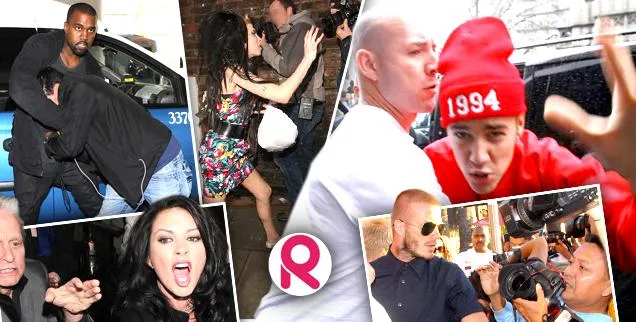
Photo: celebrity paparazzi confrontation staged drama smartphone cameras, via media.radaronline.com
There's a particular kind of celebrity crisis that has a tell. It's almost too clean. The leaked information arrives on a slow news day. The 'candid' confrontation happens within range of a photographer whose presence there is, if you think about it, a little hard to explain. The 'unhinged' social media post goes up, generates forty-eight hours of discourse, and is deleted just long enough after posting that every outlet has already screenshotted and published it.
Real crises are messy, asymmetrical, and genuinely damaging. Manufactured crises are messy in a very specific, controlled, ultimately profitable way.
Welcome to the boredom economy, where the most dangerous thing a celebrity can be is forgettable, and where an increasing number of them have concluded that the fastest cure for irrelevance is a well-timed disaster they personally designed.
The Relevance Gap and Who Falls Into It
Understanding why celebrities manufacture scandal requires understanding the specific terror of the relevance gap — the period between projects, between eras, between cultural moments when a celebrity exists in the public consciousness but isn't actively generating heat.
For previous generations of celebrities, the relevance gap was manageable. You made a movie, it came out, you did press, you went home. The audience waited. Nobody expected continuous content generation from someone who wasn't, technically, a content creator.
The social media age collapsed that model entirely. Now the gap between projects must be filled with something. The audience — and more importantly, the algorithm — requires feeding. A celebrity who goes quiet for three months doesn't just lose attention. They lose placement. They fall out of recommendation feeds, out of fan conversations, out of the cultural vocabulary. By the time their next project arrives, they're fighting to reclaim ground they used to hold for free.
For celebrities who've been sufficiently media-trained to avoid genuine unscripted moments, who have teams specifically designed to prevent real scandal, the options for filling that gap are limited. You can do brand deals, which feel commercial and often read as desperate. You can do 'personal content,' which requires either genuine vulnerability or the performance of it. Or you can generate news.
And if no news is naturally forthcoming, you can generate it yourself.
The Manufactured Scandal Playbook
The techniques have become recognizable to anyone paying close enough attention, which is to say, not many people, because the whole strategy depends on most people not paying that close attention.
The Accidental Leak: A piece of private information — a text exchange, a behind-the-scenes detail, an 'insider account' — surfaces through a source that is technically not the celebrity but is, in practice, the celebrity. The celebrity reacts with what appears to be genuine surprise or irritation. The reaction generates more coverage than the original leak. The celebrity has successfully created two news cycles out of one planted story.
The Unhinged Post: A social media post that appears to be an impulsive emotional outburst but contains, upon close reading, a suspicious level of rhetorical precision. Real impulsive outbursts are grammatically chaotic and logically scattered. Manufactured ones hit their talking points with the clean efficiency of a prepared statement while maintaining the aesthetic of someone who definitely did not run this by their team first.
The Staged Paparazzi Confrontation: This one requires the most infrastructure but produces the most durable coverage. A 'chance' encounter with a photographer, a rival, or a piece of public drama that reads as spontaneous but has the visual composition of something that was, at minimum, not actively avoided. The celebrity gets the optics of being 'caught in the wild' without any of the genuine unpredictability that actual candid photography involves.
The Cryptic Post Cycle: A series of vague, emotionally loaded social media posts that invite fan speculation without confirming anything. The speculation generates engagement. The engagement generates press coverage of the speculation. The celebrity has successfully created a news story about a thing they technically never said.
The Risk Math (And Why It Sometimes Fails Catastrophically)
Manufactured scandal operates on a specific risk-reward calculation that looks clean on paper and occasionally explodes in practice.
The theory is that controlled controversy generates coverage, coverage generates engagement, engagement maintains cultural relevance, and cultural relevance translates into commercial value. The celebrity takes a short-term reputational hit in exchange for staying in the conversation, and the hit is manageable because it was designed to be manageable.
The failure mode — and it is a spectacular failure mode when it hits — is when the manufactured drama makes contact with something real and uncontrollable. A planted story that intersects with an actual grievance somebody has. A staged confrontation that produces a genuine response from someone who wasn't in on the plan. A cryptic post that the audience reads in a direction nobody anticipated.
At that point, the celebrity is in the worst possible position: holding a crisis they created, that they cannot credibly claim ignorance of, that has now evolved beyond anything their original strategy was designed to contain. The scaffolding is visible, the manipulation is apparent, and the audience — who will forgive almost anything except being made to feel stupid — is not pleased.
The Long Game Nobody's Winning
Here's what the relevance-by-crisis strategy ultimately produces: a celebrity class that is famous for being famous for drama, whose cultural identity is entirely constructed around manufactured chaos, and who have no discernible path back to being interesting for any other reason.
The audience is not infinitely patient with self-generated spectacle. There's a ceiling on how many times a person can manufacture their own meltdown before the audience starts rooting for the meltdown to be real, just for the novelty of authenticity. When everything is a performance, the only thing that breaks through is the thing that isn't.
The deepest irony of the boredom economy is that the celebrities most desperately manufacturing drama to stay relevant are doing so because they're afraid of being boring — and the manufacturing process is, ultimately, the most boring thing of all.
Real mess is interesting. Scheduled mess is a press release with better lighting.
And audiences, whatever else you might say about them, can eventually tell the difference.