Weird Is Expensive: The Hidden Cost of Being Genuinely, Unapologetically Yourself
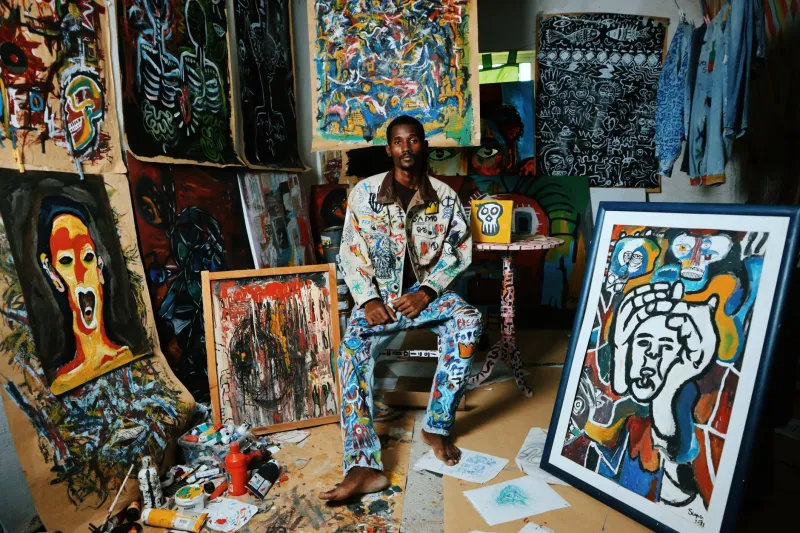
Let's start with a thought experiment. Imagine two creators. One makes mildly relatable content about iced coffee, situationships, and apartment organization. The other makes deeply specific, surrealist video essays about the emotional lives of obsolete kitchen appliances — and somehow, inexplicably, has 800,000 devoted fans who would die for them.
Guess which one just landed a six-figure deal with a meal kit company?
Yeah. The iced coffee person. Obviously.
This is the authenticity tax — the invisible, quietly brutal premium that genuinely eccentric creators and celebrities pay just to exist in an industry that claims to worship originality while systematically rewarding the beige.
The Price Tag on Being a Weirdo
Here's what nobody tells you when they say "just be yourself" online: if your "self" is legitimately strange, you are going to need help translating that to an industry that communicates exclusively in spreadsheets and pitch decks.
Niche audience consultants — yes, that's a real job title people have business cards for — can run anywhere from $200 to $500 an hour. Their entire function is to help creators whose appeal defies easy categorization explain, to brands with the cultural literacy of a mid-tier HR department, why their audience is actually valuable. You are, essentially, paying someone to convince corporations that your fans are worth courting even though they can't be described in a single demographic bullet point.
Then there's personal brand architecture. The boring celebrity doesn't need this. Their brand is "attractive person who seems nice." Done. Free. The weird creator, though? They need someone to synthesize their chaotic, multidimensional persona into something a marketing team won't immediately flag as "too niche" or — and this is a real note people receive — "confusing for general audiences."
Confusing. As if the problem is the creator, not the audience's imagination.
Parasocial Relationship Management Is Now an Industry
If you think that's wild, buckle up, because the parasocial economy has spawned its own entire consulting vertical, and the genuinely weird are its biggest clients.
Mainstream celebrities have PR teams that operate on a simple principle: keep the talent relatable but aspirational, visible but not overexposed, and never, under any circumstances, interesting enough to inspire discourse. It's a formula. It's boring. It works.
For the creators whose audiences are deeply, personally invested in them — not as celebrities but as something closer to a parasocial best friend or a charismatic cult leader in the best possible sense — management is infinitely more complex. These audiences notice everything. They have spreadsheets tracking posting patterns. They write dissertations in comment sections. They are engaged in a way that mainstream audiences simply are not, and that engagement is both the asset and the liability.
Managing that relationship requires a level of intentionality that doesn't come cheap. Community managers who actually understand the subculture. Strategists who can tell you when your authenticity is coming across as authentic versus when it's starting to feel like a bit. Therapists, honestly, because the emotional labor of being someone's entire parasocial universe is not a small thing.
Meanwhile, the conventionally attractive lifestyle influencer posts a photo of a salad and gets 200,000 likes and a Whole Foods partnership. No consultants required.
The Mainstream Deal Problem
Here's where the authenticity tax gets genuinely infuriating. The weird creators, the ones with the fiercely loyal micro-audiences and the legitimately original points of view, are often sitting on more cultural influence per capita than their mainstream counterparts. Their audiences convert. They buy things. They show up. They evangelize.
But brands don't know how to talk to them, and more importantly, they don't know how to talk about them in a campaign brief.
So what happens? The mainstream deal goes to the person who is easiest to explain in a sentence. The quirky creator gets a smaller offer, a more restrictive contract, or worse — a "creative partnership" that slowly, methodically sands off every single thing that made them interesting in the first place.
This is not a conspiracy. It's not even malice. It's just the structural cowardice of an industry that has confused "broad appeal" with "no personality whatsoever."
Wealth Determines Who Gets to Stay Weird
And here's the part that should make you genuinely angry: actual uniqueness has quietly become a class issue.
If you already have money — family money, a previous windfall, a partner with a stable income — you can afford to stay weird. You can pay the consultants, absorb the slower brand deal pipeline, ride out the algorithm changes that inevitably punish anyone who doesn't fit neatly into a content category. You can invest in the infrastructure that makes your strangeness legible to the industry without having to compromise it.
If you don't have that financial cushion? You face a choice. Dilute yourself enough to become monetizable on the industry's terms, or burn out trying to sustain an expensive niche operation on passion alone.
That's not a creative ecosystem. That's a filter that systematically removes the most interesting voices the moment they can't afford to keep being interesting.
We've watched it happen in real time. Creators who started out genuinely strange and wonderful, who built audiences on the strength of their actual weirdness, slowly pivoting toward content that's slightly less specific, slightly more palatable, slightly more iced coffee and slightly less obsolete appliance feelings. Not because they wanted to. Because the math stopped working.
The Irony Is Doing the Most
The supreme irony of all of this is that the entertainment industry — which has spent the last decade loudly insisting that authenticity is everything, that audiences can smell a fake, that the creator economy was going to democratize culture and reward genuine voices — has built a financial structure that makes genuine voices the most expensive product on the market.
Authenticity, it turns out, has a premium price point. And most people can't afford to maintain it.
The weird ones are out here paying a tax that the boring ones never see. And the boring ones are collecting deals, partnerships, and mainstream coverage precisely because their particular brand of nothing doesn't require explanation.
So the next time someone tells you to "just be yourself" online, maybe ask them what their consulting budget looks like. Because if your self is actually interesting, you're going to need one.